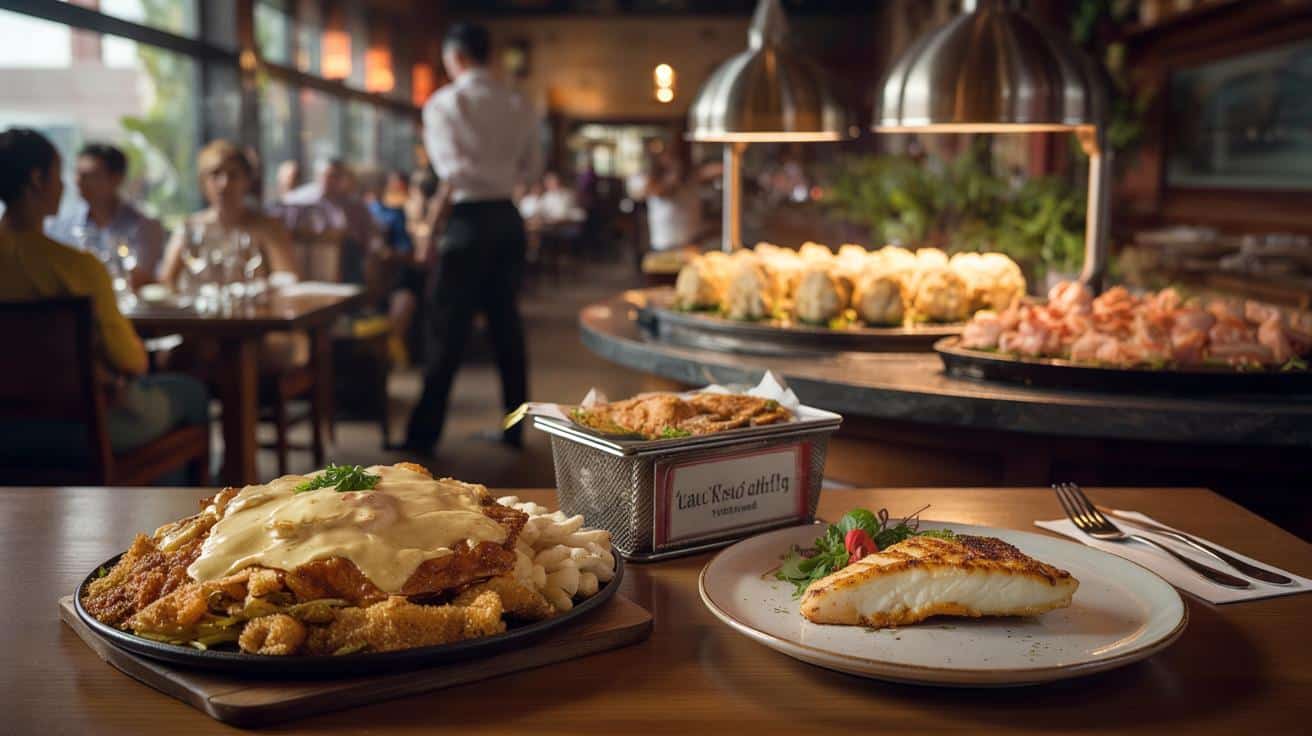
The waiter smiles and hands you a menu the size of a novella. Your friends are already ordering cocktails, the room hums with conversation, and you’re staring at 14 types of pasta, three pages of seafood and a “chef’s special” that sounds suspiciously generic. You pick something familiar. Chicken alfredo. Or that big, impressive seafood platter that seems worth the splurge.
Twenty minutes later, a lukewarm plate lands in front of you and your gut whispers what your brain didn’t want to admit: you just ordered the wrong thing.
Professional chefs say many of us do this every time we eat out.
They know exactly which dishes never to touch.
Why chefs quietly avoid certain menu classics
Ask a chef what they’d never order in a restaurant and you usually get a long sigh, a little laugh, and then a list. Not because they’re snobs. Because they know how those dishes are actually prepped, stored and rushed out of the kitchen on a busy Saturday night.
Behind the swinging doors, food isn’t just about taste. It’s about profit margins, speed, and what can survive hours in a warming area without turning into a science experiment. Some dishes were basically born to disappoint.
One London chef told me he’d sooner go hungry than order “the big mixed seafood platter” in a mid-range brasserie. “Half that stuff has been thawed twice,” he said, lowering his voice, “and the other half has been hanging around since lunch.” A New York line cook told a similar story about brunch eggs benedict: the hollandaise often sits in a jug for hours, breaking and being reheated past recognition.
We’ve all been there, that moment when you realise the dish you chose was designed more for Instagram than for your mouth.
Chefs are blunt about why certain orders are risky. Big, complicated plates with many components are hard to keep fresh and consistent. Crowd-pleasers like chicken alfredo or all-you-can-eat ribs are where restaurants quietly push cheaper cuts, heavy cream, and salt to mask mediocrity. Delicate sauces that should be whisked to order often get batched in bulk.
And when margins are tight, that “special of the day” can be less creative inspiration and more “let’s move what’s about to expire.” *Once you’ve seen it from the inside, you never read a menu the same way again.*
➡️ People who snack constantly often confuse boredom with hunger
➡️ Most people put rarely used objects in the wrong place
➡️ What it means to make your bed as soon as you wake up, according to psychology
➡️ “This slow cooker meal is what I start in the morning when I know the day will be long”
➡️ People who feel uneasy receiving support often value self-reliance
10 dishes chefs say you should think twice about
The first red flag chefs mention isn’t a specific food. It’s the menu that reads like a travel brochure. Sushi, burgers, curries, pizza, tacos and seafood towers all in the same place? That kitchen isn’t a miracle factory. It’s a compromise machine.
Start by scanning for dishes that seem out of place. Sushi in a steakhouse. Carbonara in a sports bar. Pad Thai in a generic “world cuisine” chain. When a dish doesn’t match the restaurant’s real identity, chefs say it’s usually there to catch undecided customers, not to shine.
Next, the actual landmines. Over and over, chefs bring up the same usual suspects: the “famous” chicken alfredo, all-you-can-eat shellfish, truffle oil fries, overcomplicated brunch dishes, soup of the day in empty places, and anything heavily advertised as a bargain. One French chef told me: “If the sea bass is cheaper than the burger, that fish has a story you don’t want to hear.”
Another common trap is the tasting platter. Fried sampler plates, mixed grills, “chef’s selection” boards. They’re often where odds and ends, frozen items and reheated pieces go to be disguised under sauces and garnishes.
The logic behind all this is painfully simple. Restaurants need high-margin dishes to survive, and they usually aren’t the slow-braised specials or the beautifully seared steak. They’re the pasta drenched in cream, the cheap fish sold as “catch of the day,” the cocktail shrimp that’s been frozen for months.
Let’s be honest: nobody really reads the menu like a forensic report every single time. But chefs do. They instantly see what can be prepped in bulk, what’s too cheap to be fresh, and what sounds fancy while costing pennies. That’s why many of them quietly stick to a few safe bets: grilled items, seasonal specials in busy places, and anything the restaurant is genuinely known for.
How to order like someone who’s worked the line
The simplest chef trick starts before you even sit down: look around. Is the place busy? What are most people eating? If every table has the same steaming bowl of ramen or that same roasted chicken, your odds are good those dishes are fresh and rehearsed a hundred times.
Then look at the menu with a bit of suspicion. Shorter lists usually mean tighter control. Seasonal ingredients suggest the kitchen actually cooks, not just reheats. And if one dish has a whole paragraph of description while others don’t, that can be a quiet sign of pride.
Chefs say the biggest mistake diners make is chasing value where value doesn’t really exist. That “bottomless shrimp” deal? Someone’s cutting a corner. The bargain steak on a budget lunch menu? Expect a tough cut, heavy tenderiser, and a lot of sauce. If you have allergies or specific health concerns, double your caution with buffets, creamy sauces and “mystery” marinades.
There’s also the emotional side. When you’re tired, stressed or celebrating, your brain leans toward comfort and quantity. Extra-cheesy, extra-saucy, extra-large. Restaurants know this. They build whole sections of the menu around that mood.
One chef who’d spent 20 years in hotel kitchens told me, “The dishes I’d never order? In most mid-range places: mussels on a Monday, ‘special’ sushi in a non-Japanese restaurant, chicken alfredo, and any truffle oil pasta. Real truffle isn’t neon-scented and poured over everything.”
- Huge menus with global cuisines — Hard to execute well, often rely on frozen or pre-made items — You spot the weak links before ordering.
- All-you-can-eat seafood or meat — Encourages lower quality, heavy brining and over-marination — You protect both your wallet and your stomach.
- Over-sauced comfort classics — Cream and cheese hide bland or cheap ingredients — You switch to simpler, better cooked options.
The quiet power of ordering less, but better
Once you start hearing chefs talk like this, it changes your next dinner out in a subtle way. You’re not suddenly paranoid, just more curious. You notice that the busiest table is the one sharing two starters and a main, not three oversized plates of beige food. You catch that the “truffle” fries smell the same in three different restaurants across town.
You also start to realise you don’t need ten risky options to feel satisfied. One well-chosen dish, cooked with attention, hits harder than a whole table of lukewarm compromises.
There’s a kind of relief in that. You can walk into a restaurant, glance at the menu, and quietly skip the pitfalls chefs talk about: the bottomless shellfish, the suspicious special, the tired creamy pasta. You lean into grilled fish in a seafood place, the house burger in a busy bistro, the single dish the room seems to trust.
You spend roughly the same money. You just trade anxiety and regret for something like calm confidence.
Maybe that’s the real secret chefs are trying to share when they confess the dishes they’d never order. It’s less about fear and more about clarity. Less about rules and more about paying attention. Once you see that some plates exist mainly to move inventory and margin, you naturally gravitate to the ones that exist because someone in that kitchen genuinely loves cooking them.
And suddenly, dinner out feels less like a gamble and more like a choice you’re fully awake for.
| Key point | Detail | Value for the reader |
|---|---|---|
| Spot risky menu items | Watch for huge menus, bargain seafood and out-of-place dishes | Reduces chances of disappointing or unsafe meals |
| Read the room, not just the menu | Notice what regulars order and how busy the kitchen looks | Helps you choose the dishes the restaurant actually does well |
| Prioritise simplicity | Grilled, seasonal, house-special items tend to be fresher | Better flavour, better value, fewer post-meal regrets |
FAQ:
- Question 1What are the top dishes chefs usually avoid in generic restaurants?
- Question 2Are buffets always a bad idea, or just certain items?
- Question 3Is chicken alfredo really that terrible to order?
- Question 4How can I tell if a “special of the day” is actually leftovers?
- Question 5What’s a safer way to order seafood if I’m not near the coast?